13 Ways of Looking at a Chair by BW Powe

13 Ways of Looking at a Chair by BW Powe

 Take this chair:                                            
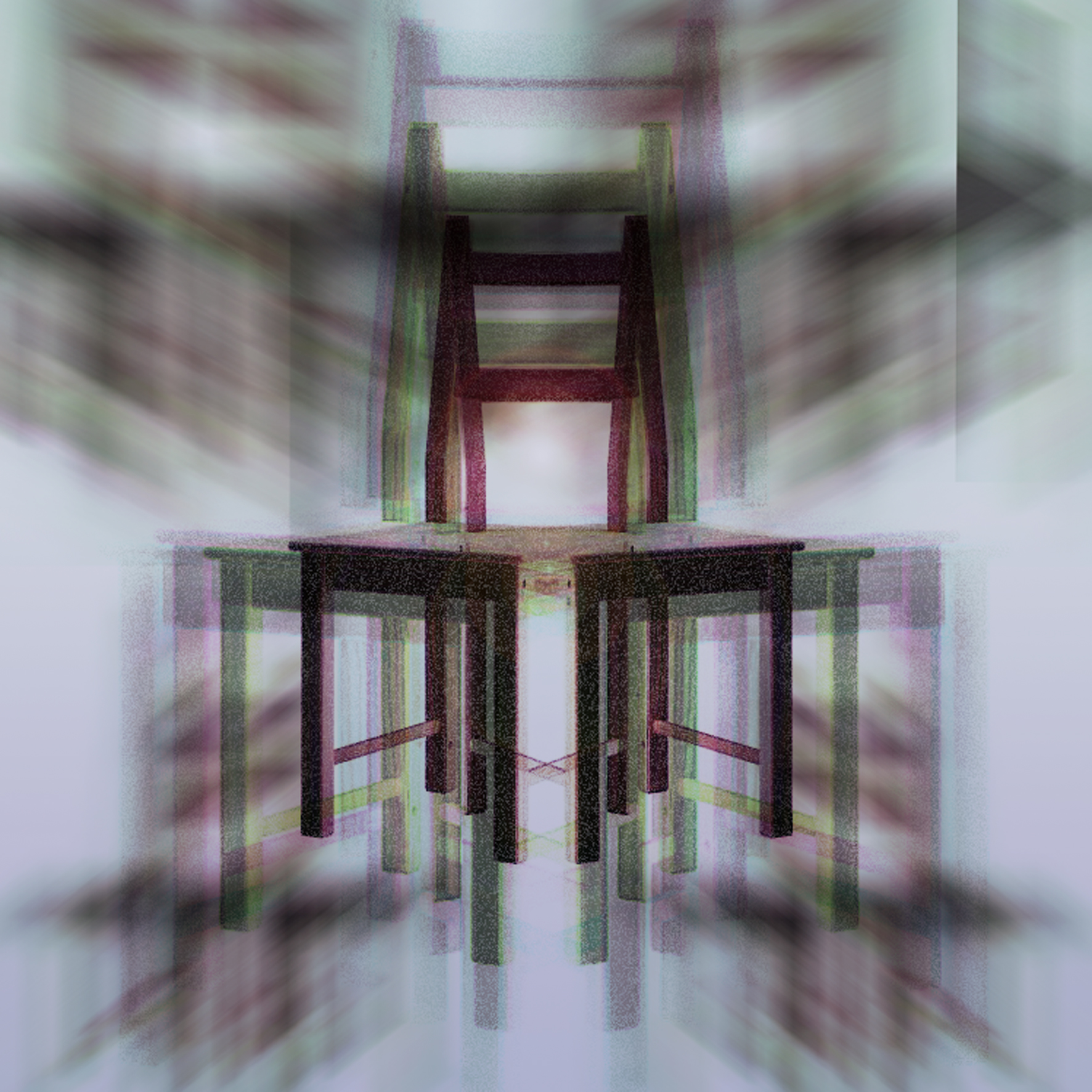
Art by Cristina Miranda de Almeida

Art by Cristina Miranda de Almeida  

Yes, it’s a chair

1. Look quickly: astrophysics/ quantum mechanics;  electrons and protons whirling. Illusory firmness.  No solidity.

2. Made of cosmic dust. Same as stars and moons. Chaos dynamics

3. Plato, ultimate chair, this is a pale copy. Mimesis of absolute chair. (Shadows on the cave wall.)

4. A commodity. Marxist reading of materiality. Late industrial capitalism. Exploitation, alienation, inequality. The result is a chair of poor quality. The chairs in the prime minister’s office (or a CEO’s office) will be much more comfortable than this one.

5. Sign of the chair. The word ¨chair¨ is representation of a language system that influences consciousness. Arbitrary term. Linguistic needs imposed on meaningless universe.

6. Freudian. Does it have sexual overtones? Penis plus womb. Everything is sexualized. What can you imagine doing on a chair?

7. Mystic´s reading. This seemingly lone object is thronged by angels; invisible energies surround it…  God breathes into the cosmos and holds everything up with breath… First Nations’ elder would say the great creator co-creates the chair…

8. Historical chair. Who has sat there? Part of our culture and time. Put a plaque on it and it becomes memorabilia and tradition.

9. Figurehead… from a place, it symbolizes the place… from a university, maybe… we sit ready for wisdom… Configures power relations: the student sits, the teacher stands.

10. Healthwise. Probably not good for posture. Plastic also unlikely to be good for us. Still many have to sit to relax and receive.

11. A random chair. Forgettable. It will pass. It will break. Nihilist vision. Not important and neither are we.

12. According to Zeno’s Paradox, the chair doesn’t really exist. We never get to it… infinite particles of space prevent us from getting there.  The chair is unreachable, unknowable. Sounds like lines from a Tom Stoppard play. Splinter its particles and you have a Picasso cubist painting, the chair seen from many angles at once.

The chair… is it still there?

13. Common sense. It’s just a chair.  Kick it. My foot hurts. Ergo it exists. (Mystics and the philosopher Bishop Berkeley would emphatically deny the common sense test. Our senses can be deceived. )

Thirteen Ways of Looking at a Chair

From object to idea to symbol to process-event.

This is a variation on Wallace Stevens’s poem Thirteen Way of Looking at a Blackbird.

William Blake said, in The Marriage of Heaven and Hell… “A fool sees not the same tree that a wise man sees”

Visionary comprehension begins with the premise that all of the above are possibilities, if not true.

Seeing many possibilities at once means awareness will not be arrested in single vision.

Allatonceness leads to multidimensional awareness (opening time). 
 

THE WOUNDED HANDS

THE WOUNDED HANDS

Yo no quiero más que una mano,
una mano herida, si es posible.

 …a Spanish princess, who, when she grew oldand wizened,
allowed the court painter,
the official artist of the realm, to capture on canvas
only her hands, which had remained tender, unblistered,
unblemished – the reminder and sign of her
original personality…

I
When will I see your hands? she asked her mother.
Not now, not yet.
I’ve worn these gloves
since the fire that widowed me

singed them, almost consumed them.
I don’t know if you could stand
the sight,
the terrible scarring from the flames.

Her daughter still entreated her,
Let me see your secret hands.
No one she knew
had ever seen them.

Always her mother replied,
Not now, not yet.
But when, her daugther asked,
when will I be ready?

When you are inflamed by love,
someday,
then I’ll show you,
but not until you love truly.

II
The girl grew, until
she met a man,
after many boys,
who sparked wonders in her.

They made each other new
every day, discovering
the taste and touch
beyond society.

I’m ready to see
your hands.
I’m ready
because of love.

Her mother, pale, wrinkled,
tired, thin,
sighed to see the ache
in her daughter’s face.

Prepare yourself,
she said.
Sit
near me.

Slowly her mother removed
one glove, then
the other, and revealed
white immaculate hands.

The two shuddered
at their otherworldly beauty,
the still youthful hands
that could mold generations.

So you see,
she said, turning them
as if they were a fugitive
mirage,

why I can never,
and must never,
show them
to anyone else.

Few could bear
such grace.
Few could bear the tragedy
of such a vision.

“The Unsaid Passing” BW Powe (Guernica) 2005

Dreaming Eden

                                                   Dreaming Eden                                          

                                                        *                                                       

                       Imagine.  You’ve arrived in the garden of delight.  This time you see it. You know where you are.  It took a long time to get to this recognition but now you’re here.

                                                        *

                      At the top of purgatory you emerged from the path that winds its way around the mountain.  You did this, though invisible guides whispered in your ear along the way; they kept you company.  You see the garden and breathe in its sweet scents.  After the long climb you feel serene. The pleasures of the roses and the trees and the streams and the breeze permeate your senses.  

                      At the apex the stars sound. The stellar lyric plays. You hear the music of the spheres.  The trees are lined in groves beside a stream. They sway in the breeze.  You see there isn’t one tree now: there are many.  All around you red and white roses unfold, growing quicker than your eye, in the warm light.

                                                         *

                       You’ve arrived, after much.  You feel the welcome in the garden and stream, in the music, the rhythm of the trees, the unfurling flowers, and in the welcome that was meant for you and for every traveler.

                                                        *

                      You imagine: soon others will arrive.  Some struggle up from the mountain path. Some are coming down from the sky.  All of you will rendezvous.  The message has been falling from between the stars for longer than anyone knew: your exile is over. The garden is yours.  It’s always been yours. 

                      But of course you didn’t know this, and it will take a long time to learn how to live here.

                   “Where Seas and Fables Meet: Aphorisms and Parables”  BW Powe (Guernica) 2015

Machado Variations

Art by Cristina Miranda de Almeida

Art by Cristina Miranda de Almeida


       A Canadian who loves Spain (and his magnificent Spanish woman) honours Adolpho Suarez, and the way he changed the face of your country. He helped to initiate the great vital democracy that Spain now manifests. My condolences. Even here in Canada we know that there a great soul has passed.


B.W. Powe, 2014

Machado Variations

Today is open to tomorrow

and our morning to the infinite

citizens and performers in the global theatre

in the global membrane

the past is here

and so is the writing of tomorrow

on

today

B.W. Powe